




Chiringuitos and Restaurants in Conil and surroundings to enjoy the best almadraba tuna and seafood of the Atlantic coast.


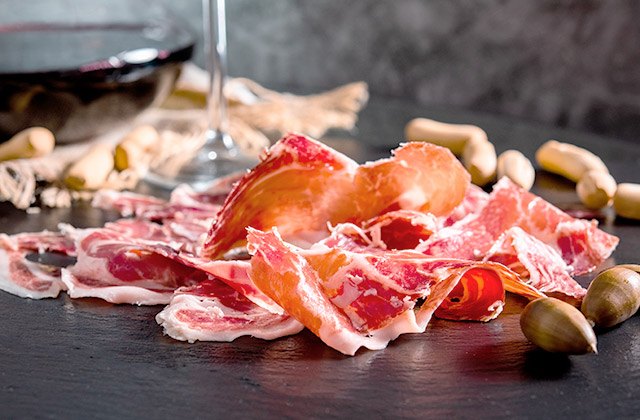
There are many different types of ham on the market. Ibérico ham is one of the best known, while Serrano ham comes from white pigs and must meet specific production requirements. There is also cooked ham, popularly known in Spain as jamón de York.
Hams are classified according to several factors. One is the breed of pig, which may be a white breed or have a specific percentage of Ibérico ancestry. The animal’s diet and rearing system also play an important role. Official classifications for Ibérico ham distinguish between acorn-fed, free-range grain-fed and grain-fed ham.
Among experts and on restaurant menus, the term Serrano ham is used to identify cured ham made from white pigs. This category includes products with different curing times, characteristics and quality levels.
The production time is another factor that determines the variety of cured ham made from white pigs. The terms bodega or cava, reserva or añejo, and gran reserva require minimum curing periods of 9, 12 and 15 months respectively.
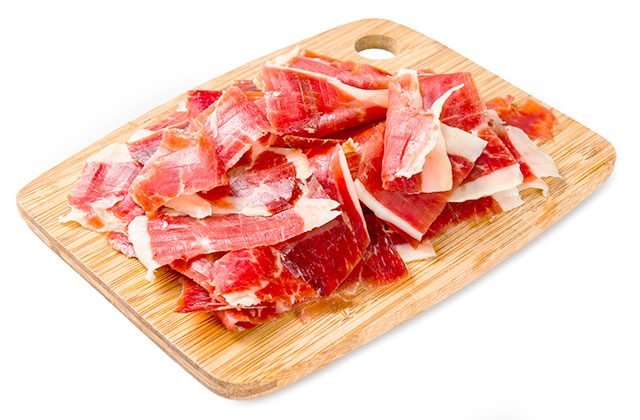
When we talk about Serrano ham as a generic name, we are also talking about cured ham using the salting method. An ancient process used to prolong the preservation of food; very useful when there were no modern methods to refrigerate or freeze food.
The origin of ham and the place where the pig was raised and the ham were prepared are also considered when putting together the list of ham types. Something that also leads to different denominations of origin. As other gastronomic products like wine or olive oil, there are hams of different Denominations of Origin. Jabugo Designation of Origin ham is one of the most appreciated for his high quality.
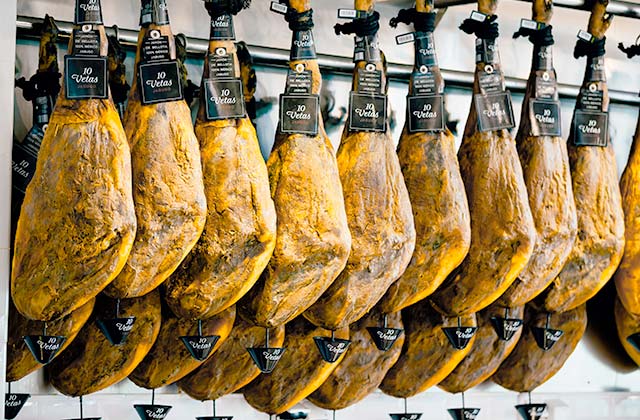
Ham is one of those gastronomic products with a long-standing tradition in Spain in general and in Andalucia in particular. Its origins go far back in time, as much as the consumption of pork meat.
Legend has it that cured ham came about by accident, when shepherds roasted a pig that had died when it fell into a creek with a high concentration of salt. They tasted the roasted meat and discovered that the hind legs were the tastiest.
Its documented history dates back at least to the late 2nd century BC, during the Roman period, which is when the first written references to the practices of salting and preservation of pork can be found and the use of these techniques in Spain is mentioned.
The way in which the pig is sacrificed and cut up, and the meat is salted and dried is still the one that is used today. Traditionally, the procedure begins with the slaughter in the last months of the year to take advantage of low temperatures in order to carry out the rest of the process.
The existence of a currency for the trading of ham in the times of Augusto and Agripa is also documented
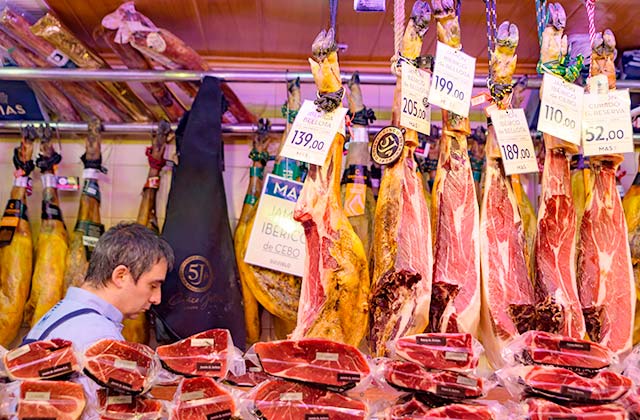
Lovers of cured ham are usually connoisseurs of different types of ham. They can even tell the variety of ham before tasting it. The aroma, colour and texture are different in each case. These differences are very evident between cured Serrano ham and cured Iberico ham. Not all Serrano hams are the same, nor are Iberico hams of the same quality.
To start classifying this product there are two basic divisions: serrano ham and Iberian ham. From here you just have to enjoy every one of its varieties.
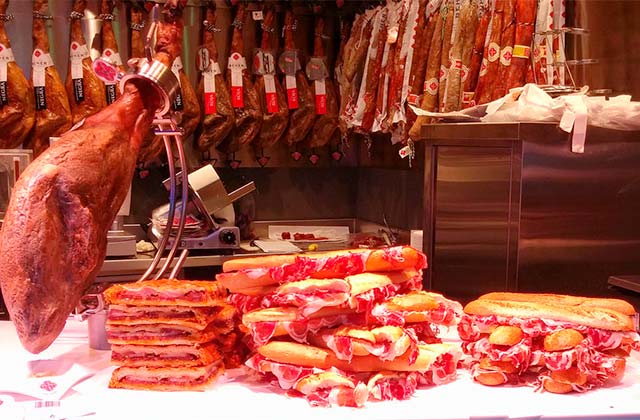
Ibérico ham comes from pigs that are at least 50% Ibérico breed. Depending on their diet and rearing system, it can be classified as acorn-fed, free-range grain-fed or grain-fed ham. Pigs used to produce acorn-fed ham roam freely during the montanera, the acorn-feeding season, while those used for grain-fed ham may be reared under intensive farming systems.
Acorn-fed 100% Ibérico ham is one of the most highly prized varieties. Hams from pigs that are 50% or 75% Ibérico breed are also available. The full designation must state both the breed percentage and the type of diet and rearing system.
During the final fattening stage, known as the montanera, the pigs feed on acorns, grass and other natural resources found in the dehesa, without receiving supplementary feed. This ham is the finest that exists in the market and, in turn, the most expensive.
This ham comes from pigs fed mainly on animal feed made from cereals and pulses, although they may also forage on the natural resources found in the dehesa or countryside. They are reared on extensive farms or in outdoor facilities.
This ham comes from pigs fed mainly on animal feed made from cereals and pulses and reared under intensive farming systems.
Whatever your favourite type of Iberian ham, this is the most coveted by lovers of this food, so you must try it. Do not leave Andalucia without experiencing this explosion of flavours and if you can, accompany it with a good Andalucian wine.
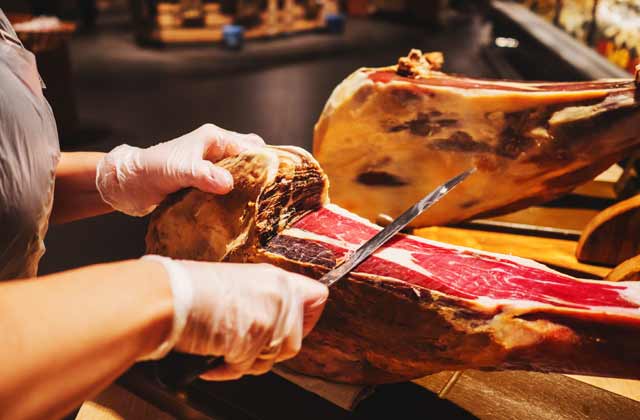
Serrano ham comes from white pigs and their diet is based on fodder derived from cereals. In this case the range depends on the curing time. This delicacy is more widespread and it is often used for sandwiches at breakfast (the most popular one with oil and tomato) or for other recipes as an additional ingredient such as gazpacho, sauteed mushrooms, or any stuffing or garnish for other meat.
9-12 months of curing
12-15 months of curing
More than 15 months of curing
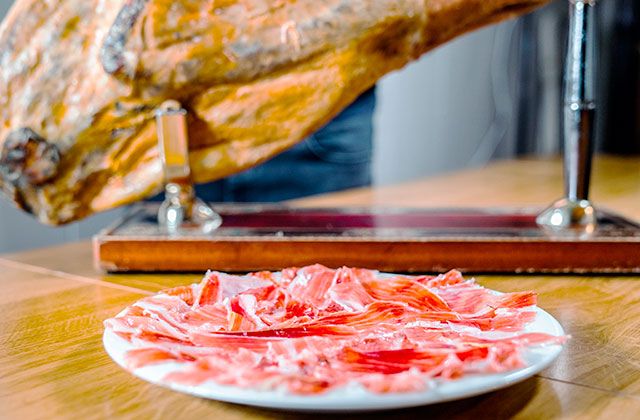
The European Union recognises a series of varieties of cured ham through different brands. Different officials ensure the compliance of characteristics of the product relating to the breed, the place where the pig is raised, the place where it is fed, the type of food the animal receives and the place where it is prepared.
In Spain there are four Iberico ham Designations of Origin recognised by the EU. Those belonging to the production and preparation zone located in Andalucia are:
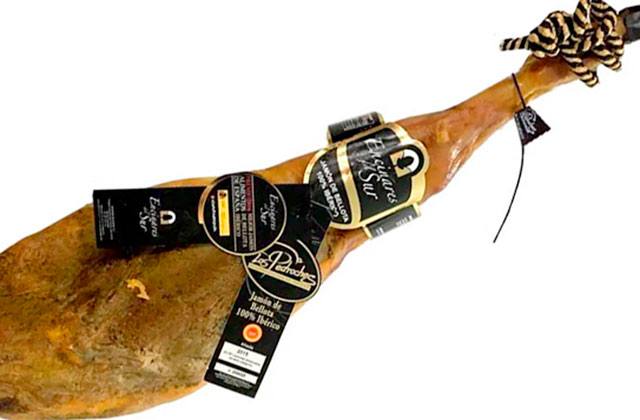
Jabugo Protected Designation of Origin (Jabugo DOP). A distinction certifying the origin and quality of hams and back legs of Iberico breed pigs raised and fattened in the pasture. It also certifies that they have been prepared in natural warehouses in the towns of the Sierra de Aracena and Picos de Aroche.
The production and fattening zone of Iberico pigs of the Jabugo DOP are the holm oak, cork tree and gall oak pastures of the provinces of Badajoz, Cáceres, Córdoba, Huelva, Seville, Cadiz and Malaga.
The preparation zone of hams and back legs with Jabugo DOP is limited to the 31 towns of the Sierra de Aracena and Picos de Aroche.
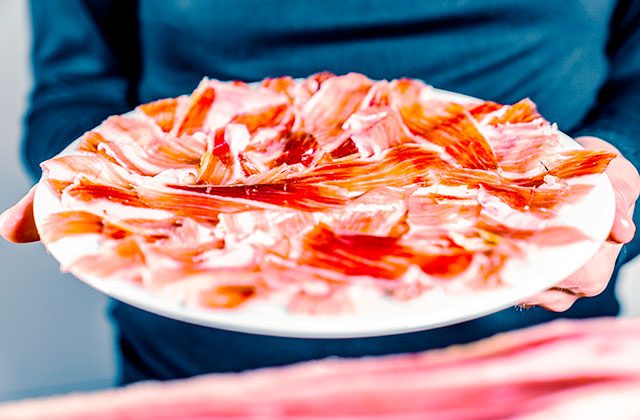
Los Pedroches Protected Designation of Origin (Los Pedroches DOP). The production, fattening and preparation of the Iberico hams and back legs with this designation coincide. Holm oak, cork tree and gall oak pastures located in specific municipalities in the north of Córdoba province. Some of them are Pozoblanco, Torrecampo, Pedroche, Bélmez, etc, with over 30 in total.
Within the Los Pedroches DOP, there are three varieties of ham and back legs:
100% acorn-fed Iberico. Pieces of 100% Iberico pigs, whose final pre-slaughter fattening was based exclusively on acorns and grass.
Acorn-fed Iberico. Unlike the above, in this case, the pieces come from pigs with 75% genetic Iberico breed.
Dry lot feeding. This variety comprises two categories: 100% Iberico dry lot feeding and 75% Iberico dry lot feeding. In both cases, the final pre-slaughter fattening of the pig is carried out on its pastures, based on the natural substances thereof and natural grains prepared with grains and pulses.
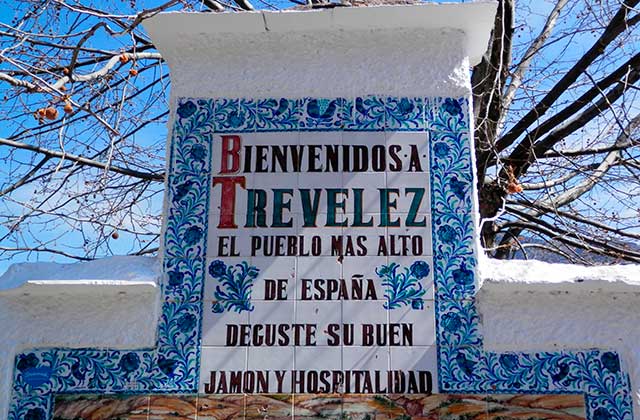
This is another type of ham produced in Andalusia and protected by a Protected Geographical Indication (PGI). It is made from white pigs and must meet the requirements set out in the designation’s product specification.
Trevélez PGI hams are produced in several municipalities in the upper Alpujarra region of Granada, on the southern slopes of the Sierra Nevada.
The hams are naturally cured. The minimum production period depends on the fresh weight of each ham and may be 14, 17 or 20 months.
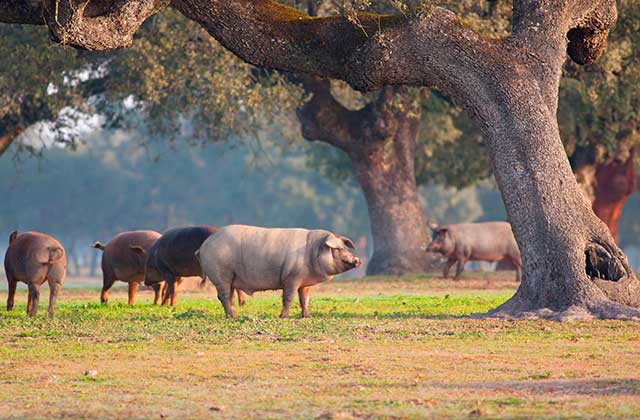
You can taste different types of ham anywhere in Andalucia. Huelva province is the producer of the most internationally renowned ham. Those of Jabugo province are the most famous. As in the case of hams from Córdoba or Granada province, not all are the same.
Hams and shoulders bearing the Jabugo PDO may only be produced and marketed under this designation by operators registered with and certified by the Regulatory Council. From the curing cellars located within the designated production area, they are distributed to national and international markets.
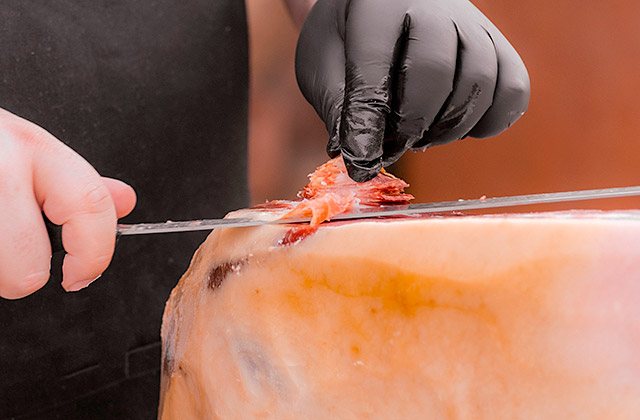
Cutting ham well is essential for enjoying this traditional Andalucian delicacy. A top-quality ham can lose some of its valuable properties if it is not carved professionally. Carving ham is quite an art.
The skill of ham carver is among the most respected in select restaurants and gastronomic establishments. A good professional with this skill is as valued as a good sommelier. There are international ham carving schools and competitions to choose the best ham carvers.
Enjoying thin slices of carved ham is one of the greatest gastronomic pleasures, accompanied by a good red or white wine, or a good beer, and a slice of good bread or with traditional bread sticks. This is the simplest way and for many most exquisite way of eating ham. But there are hundreds of recipes that include ham as an ingredient. And who has not eaten a huge and sandwich of top quality ham?
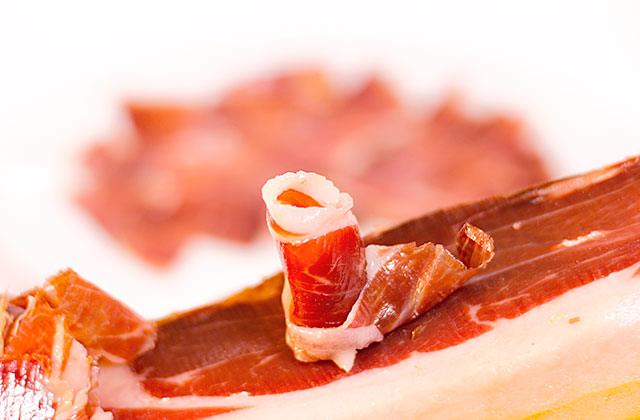
Choosing good ham and serving it properly will help you make the most of its aroma, texture and flavour. You don’t need to be an expert. Simply pay attention to a few details and follow some straightforward tips.
Read the label carefully
Check the product’s full designation, the animal’s diet and, in the case of Iberico ham, its percentage of Iberico breed. The coloured seals also make each category easier to identify: black for 100% Iberico acorn-fed ham, red for Iberico acorn-fed ham, green for Iberico free-range grain-fed ham and white for Iberico grain-fed ham.
Don’t confuse breed with diet
A 100% Iberico ham isn’t necessarily acorn-fed. The percentage refers to the animal’s breed, while terms such as de bellota, de cebo de campo and de cebo indicate its diet and how it was reared.
Serve it at the right temperature
Ham should be served at room temperature so that it releases its full aroma and the fat develops its characteristic texture. If it’s vacuum-packed, take it out of the fridge in advance and open the packet a few minutes before serving.
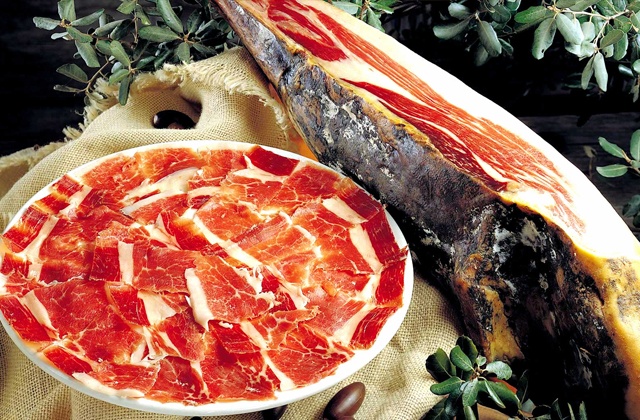
Cut it into thin slices
The slices should be thin and small, with a little fat on each one. If you have a whole leg, use a stable ham stand and a sharp carving knife. If you’re not an experienced carver, you can have it hand-carved and packed in individual portions.
Store it correctly
Keep a whole ham in a cool, dry place, away from direct sunlight and sources of heat. Once you’ve started carving it, protect the exposed surface carefully. For packets of sliced ham, always follow the storage instructions and use-by date shown on the packaging.
Keep it simple
Ham can be enjoyed on its own, with bread or accompanied by traditional Spanish breadsticks. It also pairs beautifully with tomato, extra virgin olive oil, cheese and some Andalusian wines. The key is to serve it in small portions and savour every slice without rushing.
How to carve the best slices of ham. We’re pleased to introduce you to the best ham carver in Spain
The Iberian Cured Ham Route in Huelva, the most authentic taste of Spain.

Hotel Fuerte El Rompido
If you want to try what many consider the best ham in the world, the best place to stay is the Hotel Fuerte El Rompido. You will find it in one the most unique places on the Huelva coast, at the mouth of the River Piedra. A privileged natural setting to savour Jabugo Designation of Origin Ham, and you can accompany it with some of the area’s famous wines.












Excellent explanation about the world of ham, spanish ham and iberico ham. Congats for clarifying the differences between each type of ham.