


Discover some of the best tapas bars in Conil


In each season, we feel like enjoying different dishes, and now that the cold weather comes and temperatures drop, in Andalucia we like dishes that warm us up. Spoon dishes are the stars of the Andalucian tables, although other traditional recipes from our land mark the arrival of autumn and winter, and we can’t wait to try them during this time of year.
Stews, soups, casseroles, or Andalucian stew are some of the typical dishes of southern Spain’s gastronomy. These Andalucian winter recipes have been passed down from generation to generation and are part of our tradition. Although nowadays there are more elaborate versions by our cooks and chefs, they still retain the same base: potatoes, legumes, or meats are some of the ingredients used to prepare them.
Although we favor spoon dishes to combat the low temperatures, enjoying some good migas is one of the most typical and delicious aspects of Andalucian cuisine during the cold season. And who hasn’t felt like having some roasted chestnuts, with their aroma filling the streets of our towns and cities, reminding us that winter is already here?
The variety of traditional Andalucian dishes and products we can enjoy in winter are of great quality and tradition, marking the identity of Andalucian cuisine during this season. That’s why we present a wonderful selection of recipes and typical dishes from our land, so you can warm up in a very delicious way.

The soups and stew dishes of Andalucia originate from rural traditions and the use of local, accessible ingredients like legumes, vegetables, and pork products. These recipes provided nourishing and comforting meals during cold winters in rural areas. Many dishes, such as potaje and puchero, have roots in Arab and Mediterranean cuisine, which have adapted over time to meet local needs, emphasizing the use of olive oil and typical regional spices.

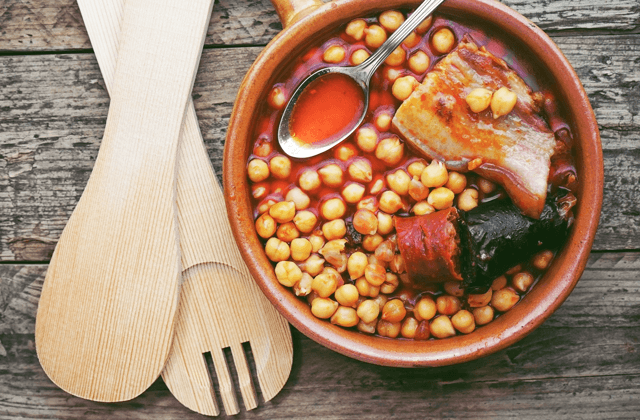
This is the winter dish par excellence in Southern Spain. The “puchero” is made from chickpeas as the base ingredient; depending of the Andalucian region, it takes more or less soup. In Malaga, it is more diluted, and a handful of rice is usually added. In Huelva, it is cooked with plenty of vegetables. In Cadiz, pork is combined with veal, and in Granada, it takes a lot of bacon. Meat, vegetables and legumes are mixed with salty bones to prepare this typical dish that will not leave you indifferent. Apart from exquisite, this casserole is versatile, because if you have any leftovers on the following day, you can take the chickpeas, smash them and fry them, and then prepare what is known as “ropa vieja”, a well-known typical dish of the Spanish postwar era.

Gazpachuelo is a traditional hot soup from Málaga that has been a staple winter meal for local fishermen for generations. It is made with a broth containing potatoes and a mayonnaise traditionally prepared with egg, olive oil and a few drops of lemon juice. Over time, ingredients such as white fish, prawns and clams have been added, giving rise to different versions of this typically Malagan recipe.
The secret is to gradually stir the mayonnaise into the warm broth, making sure it doesn’t come back to the boil, as this could cause it to split. It’s often served with bread and is perfect for warming up on colder days.
If you’re visiting the Costa del Sol and fancy a meal featuring fish and seafood, this is one of the traditional dishes you simply must try.

Although they are famous all throughout Spain, in Andalucia they are cooked very often and in a special way, having become a typical dish in Southern restaurants. The good Andalucian cured pork sausages like the “chorizo” and “morcilla” have been included in large amounts as another ingredient to this dish. The secret to prepare tasty lentils is to simmer them over low heat, even better when done on a charcoal fire. If you are coming to the South, do not miss them!

Beans are very popular in Spain, particularly in Asturias, where we can find the famous “fabada” (bean stew with Spanish sausage). But the taste of beans in Andalucia is different than in the rest of the country. Here we cook the popular “bean soup”, a winter dish par excellence to warm us up. In Malaga, it is customary to make it with pinto beans. A famous attraction are the roadside stands of Ojén, Alhaurín de la Torre and Mijas, where you can taste the most traditional and home-made flavors.

Stewed potatoes, or guisaíllo de papas, as they’re known in Andalucia, are another great example of traditional winter cooking. They’re usually prepared with beef, although there are also versions made with other meats or just vegetables. Sweet paprika, garlic and black pepper give this traditional stew its distinctive flavour.
It’s one of those comforting homemade dishes that are especially tempting when temperatures drop. And when cooked slowly, the potatoes soak up all the flavour of the broth, making them even more delicious.

This is a typical Andalucian soup, specially widespread in the areas of Almería and Seville. It is prepared with poultry meat, usually chicken, finely chopped together with a hard-boiled egg. It also takes thin and small ham chunks. Apart from being the ideal dinner for cold nights, it is a customary dish served in Christmas-Eve and Christmas as a starter, before turkey.

If you are travelling to Andalucia, do not miss the rice with broth. This typical dish is commonly resorted to in cold days, and is prepared in a very similar way as the Valencian “paella”. We make a fried sauce with chicken, pepper, onion, garlic and tomato, and then add the rice with three times its volume of water. This provides a more loose appearance, producing a broth which can then be prepared with noodles. An unbeatable plan for rest days: a good meal and a good nap.

Chicken soup is very popular in Andalucia and forms the basis of several traditional recipes. It’s made with chicken, vegetables and sometimes bones, which give the broth extra flavour. It’s usually served piping hot, and you can also add fine noodles to turn it into a delicious soup.
But that’s not all! The following day, you can use the leftover chicken to make the famous homemade croquettes. A great way to make the most of your ingredients and enjoy two traditional dishes from a single recipe.

The seafaring tradition present in a large part of Andalucia has resulted in many recipes with seafood as the main ingredient. That is the case with the noodle casserole, one of the most ordered dishes in restaurants and inns at this time of year. Malaga capital provides very good examples of this tasty delicatessen, and the areas of El Palo, Cadiz and Huelva are also exponents of this culinary trend, where small prawns are combined with thick noodles. Write down this recipe and prepare your spoon to enjoy its delicious flavor.

This traditional dish comes from Jerez de la Frontera and other parts of Cádiz province, and is closely linked to the region’s agricultural workers. Also known as ajo campero or ajo de viña, it was traditionally prepared by labourers working in the vineyards and remains a popular choice when the cold weather arrives.
It’s made with simple ingredients such as day-old bread, tomatoes, green peppers, garlic and olive oil. The secret lies in mashing the ingredients together and gradually adding hot water until you get a thick, flavourful mixture.
During autumn and winter, you’ll often find it served in Jerez’s traditional mostos, rustic establishments where the local young wine is enjoyed, usually accompanied by radishes. A humble recipe that has become one of the most representative dishes of Jerez’s gastronomy.

There are several versions of so-called potaje de vigilia. The ingredient that cannot be left out in all the recipes for this broth is the chick pea, and the one that will never appear is any kind of meat. It is the ideal broth for days when you need to abstain from eating meat in accordance with the precepts of the Church. The most traditional recipe for what is also called potaje de cuaresma has chick peas, chard or spinach, cod and boiled egg. In some cases, a few slices of toasted bread or croutons are also added.

This is another of Andalucia’s lent dishes. A traditional recipe from the Cádiz municipality of Algodonales and that we can enjoy in many restaurants in Cádiz province. The two basic ingredients of this broth are chick peas and oyster plants. It also includes black pudding, cumin, cloves, beans, potatoes, paprika and bread. Oyster plants are also known as golden thistle.

This is another of the traditional vegetable broths of Andalucian cuisine. Berza Jerezana is one of the most famous versions. It can be prepared with oyster plant collards or with chard fronds. In any case, the most abundant ingredients in this Andalucian stew are pulses and meat. Beans, chick peas, veal, pork, fresh bacon, black pudding and chorizo. An ideal dish to ward off the cold.

Tripe is another of Andalucia’s winter recipes. Callos a la madrileña (tripe cooked with chilis) is the most famous, but in Andalucia, we can find versions of the tripe recipe in almost every one of its eight provinces. The ingredient that makes the difference in this Andalucian recipe is chick peas, which are not present in callos a la madrileño.

This traditional dish comes from the Málaga town of Álora. It even has its own celebration, the Día de las Sopas Perotas, traditionally held on the first Saturday in October, bringing locals and visitors together to enjoy this much-loved recipe.
Like many other Andalucian dishes, it has its origins in the countryside, where farm labourers made the most of whatever ingredients they had to hand. Day-old bread, tomatoes, onions, garlic, peppers, olive oil and aromatic herbs are all part of this traditional recipe.
One of its distinctive features is that it’s served in a lebrillo, a large traditional earthenware bowl. In the past, it was often accompanied by seasonal fruit such as oranges or grapes. A recipe that remains a true symbol of the gastronomy of the Guadalhorce Valley.

This stew is a traditional dish in the eastern region of Andalucia. It is a vegetable stew in whose preparation the pear plays an important role. This dish arose due to the fact that eastern Andalucia enjoys abundant orchards and produces a lot of green beans, tomatoes, courgettes and other vegetables.

Olla de trigo con hinojos, also known as olla de San Antonio or simply olla de trigo, is a well-known traditional stew from the province of Almería. It’s made with wheat, chickpeas, various meats and pork products traditionally associated with the pig slaughter season, all flavoured with fresh fennel.
This hearty dish is particularly popular during the winter months and forms part of the traditional cuisine of many Almerían villages. As with other traditional stews, there are different versions depending on the area and the ingredients available.
It’s one of the best examples of how Andalucian cuisine has made the most of locally grown ingredients to create delicious, flavourful recipes.

Potaje de hinojo
The pout of hyneles of Graná, is a luxury for the senses, this stew is the Essence of Alpujarreña served in a dish, it is the aroma of the mountain and the taste of the recipes always. Unfortunately it is a practically unknown production in the rest of Spain, mainly because its elaboration involves the use of an ingredient such as fresh fennel shoots, a product that is practically not marketed outside the province of Granada.

Catshark broth is a tasty spicy soup that is characteristically eaten in Malagan taverns and bars. The catshark is a small halibut that is traditionally used to prepare seafood stews, one of the most traditional delicacies of the whole of Malaga.

This fish soup is known as emblanco or matamaríos, depending on where we are, and it is a typical Andalucian recipe for the cold weather.
It is a spoon dish made with hake, tomato, pepper, onion, oil, water, and potatoes, although you can also add carrots. These are basic and light ingredients that, while ideal for making this fish soup for winter days, were not enough for the husbands who used to come home from work and had to eat this dish, often still feeling hungry. This is where one of its most curious names, matamaríos (husband killer), comes from.
Your spoon is the main protagonist in all these recipes to relieve the feared winter cold. If you are touring around Andalucia, do not hesitate to try out these dishes: they will warm you up in an exquisite way. Soups, casseroles and broths for you to experience the most genuine Andalucian cuisine.

It is one of the most well-known, simple, and delicious recipes in Spanish cuisine. However, this dish originated in Andalucia, and its name, patatas a lo pobre (poor man’s potatoes), comes from the time of famine that our region suffered. The Andalucians of that time did not have enough resources to make elaborate dishes and cooked with the cheapest ingredients they could find in their kitchens. This is how patatas a lo pobre came about. It’s a perfect recipe for cold weather, made with potatoes, onions, and olive oil. These are the basic ingredients, but over the years, variations have emerged. Some people add eggs, garlic, and/or fried peppers, creating different versions of this simple yet delicious dish.

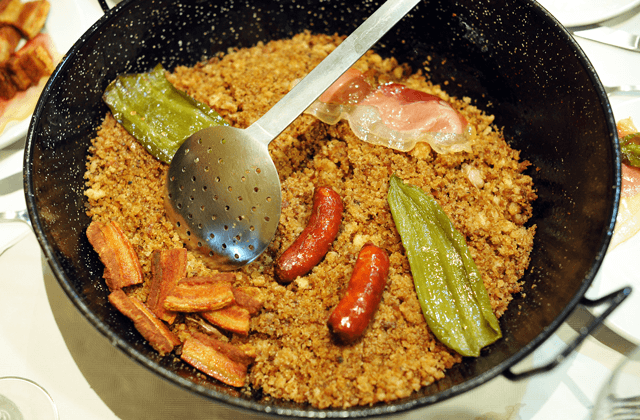
Migas is one of the best dishes to combat the cold in Andalucia, especially in inland areas with lower temperatures. This dish from the Andalucian winter recipe collection is one of the most delicious and will certainly warm you up.
There are different ways to prepare this dish, as some people make it with bread and others with semolina. In any case, Andalucian migas are delicious, and although it is a dish that requires more time, it is simple to prepare. You can use bread with a lot of crumbs that have been sitting for a few days, as they need to be a bit hard, and cut it into small cubes. Once you have that, fry some garlic in olive oil in a pan. When the garlic turns golden, add the meat. There’s something for everyone here, from chorizo, bacon, chistorra, to blood sausage. Some even use different types of meat. Once all the meat is cooked and has released its juices, add salt and water, then put in the bread you had cut earlier. It needs to soak in the liquid, and you will begin stirring continuously until the liquid is absorbed and the migas become crispy and golden.

The smell of roasted chestnuts is a sure sign that colder weather is on its way. This seasonal favourite has a very traditional and simple method of preparation. Roasting chestnuts in a special pan over an open fire or in the fireplace is one of the most popular ways to enjoy them, and it’s a custom that lives on in many towns and villages.
Before roasting them, it’s best to make a small cut in the shell to stop them bursting in the heat and make them easier to peel afterwards.
And who hasn’t come across a roasted chestnut stall while strolling through the streets at this time of year? Although you can now prepare them at home in the oven or even the microwave, enjoying freshly roasted chestnuts remains one of Andalucia’s most popular autumn and winter traditions.

When the cold weather arrives, few things are more tempting than a hearty, warming stew. Traditional soups, casseroles and stews are an essential part of Andalucian gastronomy and a wonderful way to discover the region’s most authentic flavours. If you want to enjoy these recipes just as they’ve been prepared for generations, here are a few tips to keep in mind.
Make the most of seasonal produce
One of the secrets of traditional Andalucian cooking is using fresh, seasonal ingredients. Chard, spinach, wild thistles (tagarninas), cabbage and fennel are just some of the vegetables that feature in many recipes during the colder months. As well as adding flavour, they allow you to enjoy different dishes depending on the time of year.
Cook your stews slowly
Although pressure cookers and other modern kitchen appliances make preparing these recipes much easier, many traditional Andalucian stews develop a richer flavour when cooked slowly. Allowing the ingredients to simmer together is one of the best ways to prepare a delicious puchero, homemade lentils or a traditional bean stew.
Turn leftovers into new dishes
In Andalucia, making the most of leftover food is a long-standing tradition. If you’re preparing a puchero, you can use the broth to make noodle soup and save the meat for homemade croquettes or ropa vieja, a traditional dish made with leftover meat and other ingredients. Day-old bread is also perfect for preparing migas or sopas perotas. A simple way to reduce food waste while continuing to enjoy traditional recipes.
Try the specialities of each province
Although many dishes are prepared throughout Andalucia, each province has its own recipes and ways of cooking them. If you’re visiting Málaga, don’t miss gazpachuelo or caldillo de pintarroja, a traditional spicy fish soup. In Cádiz, you can try berza jerezana or potaje de tagarninas, while in Granada and Almería you’ll find traditional stews made with fennel and ingredients from the surrounding countryside.
Ask about the daily specials
If you want to discover the most authentic Andalucian cuisine, don’t just stick to the restaurant menu. Many traditional roadside restaurants, inns and local eateries prepare homemade stews that change depending on the day and season. Ask about the house specialities and let yourself be surprised by the flavours of the region.
Prepare your pulses in advance
Dried chickpeas and beans usually need to be soaked for several hours before cooking. The easiest option is to leave them soaking overnight, following the instructions for each variety. This helps them cook more evenly and gives them a much better texture.
Enjoy traditional food festivals
Autumn and winter are great times to discover local celebrations dedicated to traditional food. One example is Álora’s Día de las Sopas Perotas, which attracts plenty of visitors keen to enjoy this famous Malagan dish. Before planning your visit, check the official dates and programme for each celebration.
We offer you the 12 most refreshing recipes of Andalucia

Hotel Fuerte Grazalema
If you wish to discover Andalucía, don’t hesitate to stay at the best hotels. Without a doubt, the best option is Fuerte Group Hotels. The chain has facilities where, apart from the regular services, you can enjoy the best of each spot in the Andalucian geography. Its over 60 years’ experience is the best warranty so you can devote your time to discovering these unusual corners. Marbella, Conil, Grazalema, El Rompido or Torrox are some of the places where you can find amazing accommodation facilities near the spots we have recommended for you.












This looks so good! I love those recipes. Almost every item looks so spicy there. Hope that test will be great when I try to make it home.