




Discover some of the best tapas bars in Conil


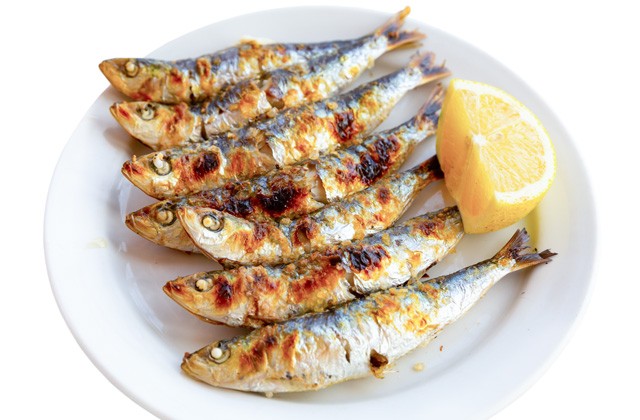
One the first things to tourists think of when they hit the beaches of Costa del Sol and Andalucia in general are the famous “bars” and beach restaurants serving delicious seafood just steps from sea. If there is one dish in particular stands out among the rest, it has to be sardines cooked on a spit, though its not available just anywhere. A true gastronomic treasure in Southern Spain, sardines cooked like this are no new by any means.

Ever since the Roman times, sardines have been prized as seafood sun dried with salt and used to manufacture a sauce called Garum. This paste, which was all the rage as a “seasoning star” was packed into jars and shipped across the sea to Rome where the prized delicacy fetched a high asking price!
No less important were the use of sardines during the region’s Muslim era. Reputable historians like Ibn-Al Jativ, who was born in Granada in the fourteenth century, wrote that “Marbella’s fish population is rich in numbers, especially sardines and fish of a certain size…”. In another of his books, he wrote that it had interested the Emir Al-Haken to know the value of those sardines that were consumed each day in the city of Cordoba – the capital of the emirate. This amount reached 20,000 dinars; an extraordinary amount, which highlighted the importance of sardines in the local Muslim diet at that time.
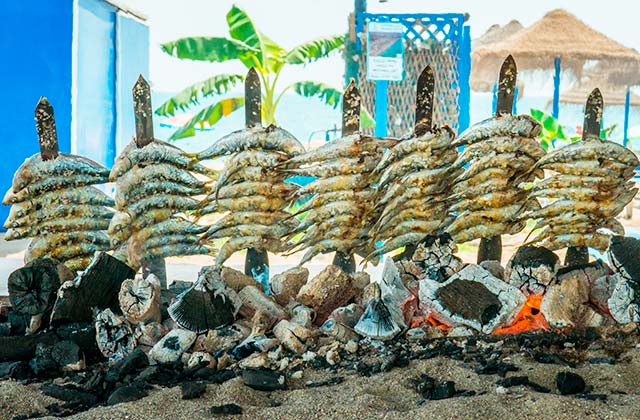
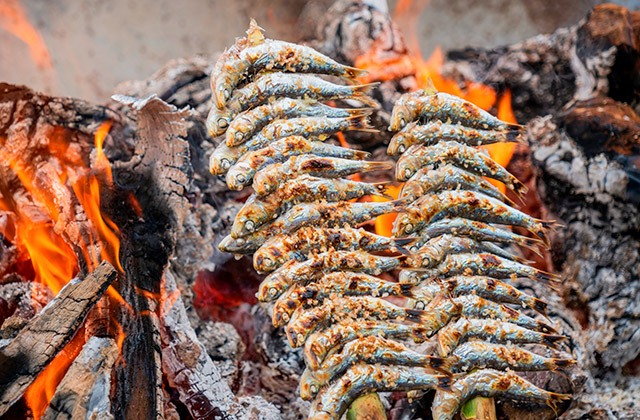
Espetos de sardinas
Travelling through time, we find another ‘chronicler of the Sardine’, the historian Pedro Vazquez. He was a famous priest who was born in and lived in Marbella in the 18th century. In his book, “The Conjectures of Marbella”, Vazquez recounts the many species of fish that could be found off the coast of Marbella, including the oysters, lobsters, crabs and clawed lobsters. Many of them, according to the author, would wash up on shore after storms.
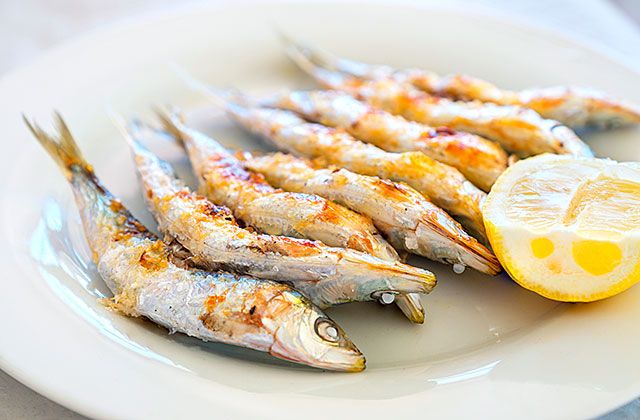
Espeto de sardinas
Today, these fish and all similar species (sardines, anchoives or tuna) are highly valued for their contribution to a healthy diet, including high levels of Omega 3, fatty acids that are important to our cardiovascular health.
We’ll finish with a bit of history, including a little wisdom that recommends eating sardines in the months that do not contain the letter “r”. So, this May, June or July, don’t hesitate when you’re near the sea and indulge in a little ‘historic’ pleasure with a taste of wonderful sardines.
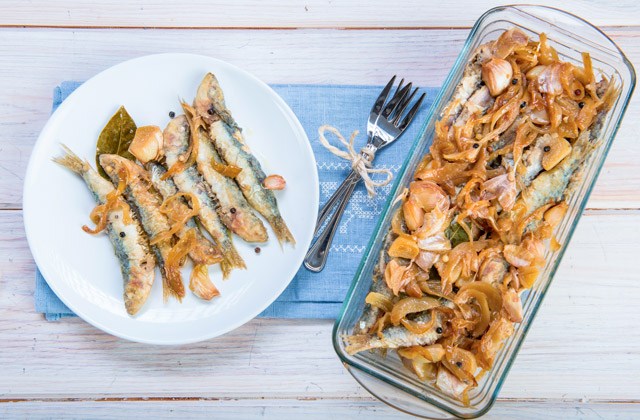
Sardines are one of those ingredients that don’t need overthinking. If the quality is good, the result depends more on cooking time than on the recipe itself.
These are the most common ways to eat sardines, and when to choose each one:
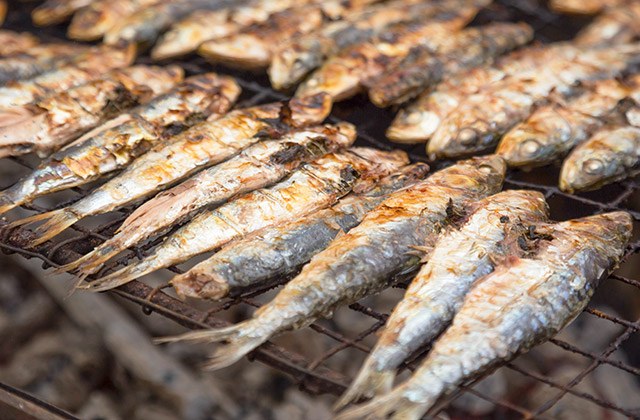
Grilled sardines or espetos
The most iconic way to enjoy them along the Andalusian coast.
When to choose them: if you’re after the most authentic experience.
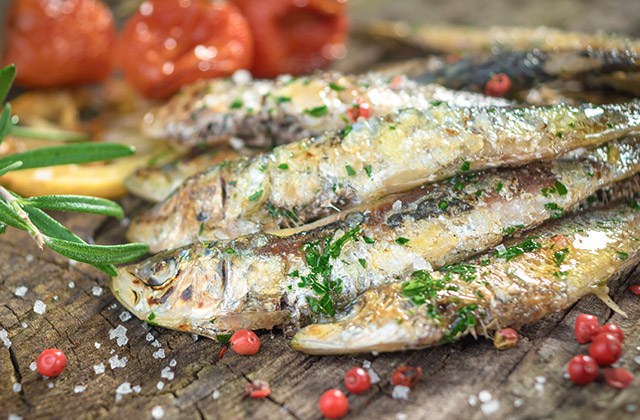
Sardines on the griddle
The most practical option at home.
Tip: use a very hot pan and minimal oil.
Oven-baked sardines
Ideal if you’re cooking for several people.
When to choose them: group meals or when you want an easier option at home.
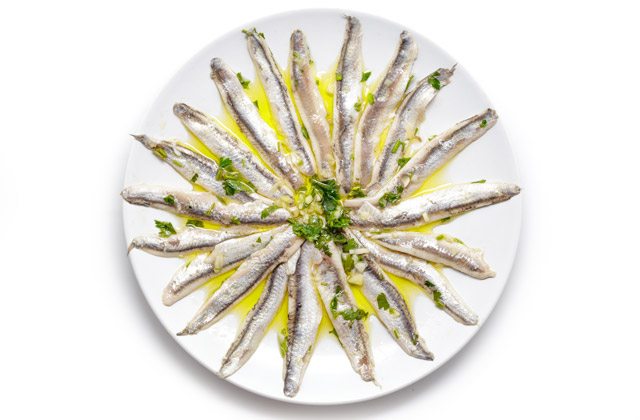
Pickled or marinated sardines
A step beyond the grill.
Perfect for: summer and slightly more elaborate dishes.
Tinned sardines
A quick option that’s often underestimated.
Quick idea: toasted bread, grated tomato and sardines in olive oil.
This is where you move from “good enough” to “really good”. Sardines don’t forgive basic mistakes, but they also don’t ask for much if you get the essentials right.
How to choose fresh sardines
Get this wrong, and nothing else really matters.
Respect the season
The best sardines come in the warmer months.
More fat means more flavour and better texture.
It’s no coincidence that summer smells like sardines.
Don’t overcook them
The most common mistake.
Simple rule: high heat, short cooking time.
Less is more
Coarse salt and little else.
If you feel the need to mask the flavour, something’s off.
Manage the smoke at home
You’ll avoid strong smells… and a few complaints.
Cleaning: depends on the recipe
There’s no single right way, just different contexts.
What’s the best way to eat sardines?
Grilled or as espetos, with salt and served straight away. It’s the method that best preserves their natural flavour.
Do sardines need to be cleaned before cooking?
It depends. For espetos, they’re cooked whole; at home, many people prefer to clean them for convenience.
How long do sardines take to cook?
Very little time. Around 2 to 4 minutes per side, depending on size and method.
Can you eat the bones?
With fresh sardines, not usually. In tinned sardines, yes: the bones are soft and rich in calcium.
When is the best time to eat sardines?
From May to September, when they’re at their fattest and most flavourful.
Espetos. The sardine ones are a Malaga cuisine classic

Olée Holiday Rentals
The best option to stay in Costa del Sol and enjoy its espetos is Fuerte Group Hotels. The chain features branches where you can enjoy all of our services and the best each region has to offer. 60 years’ experience is the best guarantee. Marbella or Torrox are some of the spots where you can find these great hotels.