28F, history and tradition of Andalucia on its big day


The fan, an object so closely associated with Spain, actually made its way to Europe from the Far East along ancient trade routes. Originally used to keep cool, fans were popular with both men and women. Men used them too, although over time they became particularly fashionable among ladies, who developed a curious and rather complicated “language of the fan”. After all, the fan has long been a symbol of seduction, imagination and freedom of expression.

The history of this fascinating accessory stretches all the way back to ancient civilisations. Over the centuries, fans have been used in many different countries and cultures. In Ancient Egypt, Greece and China, various types of fans were already being used, not only to keep cool but also during ceremonies and social occasions.
The earliest fans were rigid and made from materials such as palm leaves, feathers and fabric. Folding fans appeared much later in East Asia before gradually spreading to other countries.
It was during the 16th century that folding fans from the East began to gain popularity among Europe’s wealthy classes, thanks to the trade routes connecting Europe and Asia.

But their real heyday in European royal courts came during the 17th and 18th centuries, particularly under the reigns of Louis XIV and Louis XV of France. By then, fans had become an almost essential part of a noblewoman’s wardrobe. Luxurious materials such as precious stones, silk, gold, mother-of-pearl and other decorative elements were used to create them.
In England, fans also became fashionable accessories and were sometimes painted by specialist artists, featuring historical scenes, landscapes and ornamental designs.
In Spain, fans became particularly popular during the 18th and 19th centuries. Fan-making developed into an important traditional craft, especially in Valencia, where the tradition continues today in towns such as Aldaia.

Over the years, fans became increasingly popular and were used by people from all walks of life. Traditional folding fans have three main components: the sticks and rivet, which together form the frame, and the leaf.

The wide variety of fans has always been closely linked to the whims of fashion. There are fans of all shapes and sizes, designed for all sorts of purposes, some of which might seem rather surprising today.
We’ve looked at just a few types of fans, but there are many more, including:

Now let’s discover a little more about the secret language of the fan, a form of communication based mainly on how this accessory was moved or held.
During the 18th and 19th centuries, fans were also used as a means of communication and courtship. It is said that ladies could send discreet messages to their admirers with a simple flick of the wrist, without having to say a single word.
Although many of these gestures have been passed down through tradition, their meanings could vary depending on the time and place. There was never a single code that everyone understood.
Some of the messages traditionally associated with the language of the fan include:
As you can see, the language of the fan was remarkably varied. A simple gesture could become a declaration of love, an invitation or a way of rejecting an admirer.
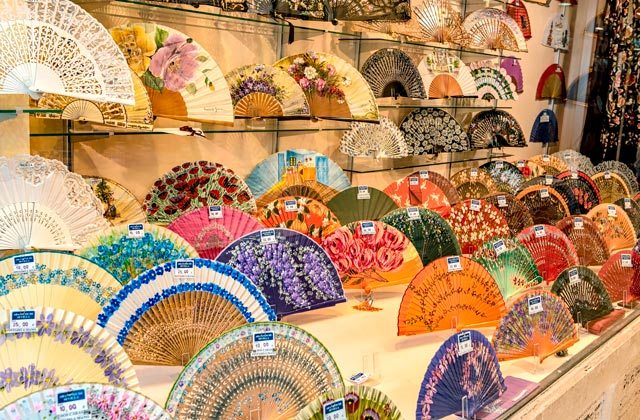
Although nowadays we mainly use fans to keep cool, they are still practical and elegant accessories. If you’re thinking of buying one or want to keep yours in good condition, take note of these tips!
Choose a comfortable, sturdy fan
If you’re going to use your fan regularly, it’s best to choose a lightweight model with strong sticks and a smooth opening mechanism. Wooden fans with fabric leaves are a good option for everyday use, while hand-painted designs also make lovely souvenirs.
Open and close it carefully
Although opening a fan with a quick flick of the wrist has a certain charm, it’s best to avoid overly forceful movements, especially with handmade fans. This will help prevent damage to the sticks or fabric.
Protect it from sunlight and damp
If you own a decorative or antique fan, store it somewhere dry and away from direct sunlight. Damp can damage the materials, while prolonged exposure to sunlight can cause the colours to fade.
Clean your fan according to its materials
To remove dust, use a soft cloth or a brush with delicate bristles. Avoid getting paper, silk or hand-painted fans wet, as moisture could damage them.
Discover handmade fans
If you’re visiting Andalusia or the Valencian Community, take the opportunity to discover traditionally crafted fans. You’ll find hand-painted designs featuring flowers, landscapes and traditional patterns, making them a lovely reminder of Spanish culture.
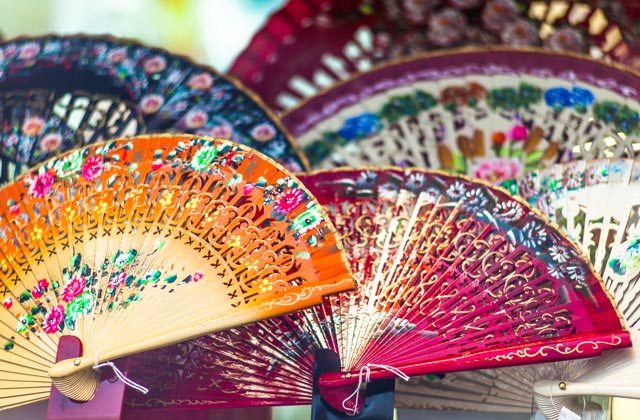
Fans are much more than accessories for keeping cool. Throughout history, they’ve been associated with some fascinating stories and unusual customs. Did you know that they’ve also been symbols of power, works of art and even a way of sending secret messages?
The earliest fans were symbols of power
In Ancient Egypt, large fans were used during religious ceremonies and royal events. Some were made from feathers and held by attendants to provide a cooling breeze and keep insects away.
Fans weren’t just for women
Although we tend to associate fans with women today, men have also used them throughout history. In some European royal courts, they were symbols of distinction, while in Asia, men’s use of fans has been part of various cultural traditions.
There was a fan for every occasion
During the 18th and 19th centuries, fans were made for weddings, parties, walks, journeys and even periods of mourning. Their materials, colours and decorations could vary depending on the occasion and the social status of the person carrying them.
Valencia has a long tradition of fan-making
Fan-making became an important traditional craft in Valencia during the 18th century. This tradition has survived to the present day, and towns such as Aldaia are still closely associated with the design and production of fans.
Some fans were genuine works of art
Many antique fans featured hand-painted decorations, mythological scenes, landscapes and portraits. Some incorporated precious materials and intricate carving, which is why they can now be found in museums and art collections.
The language of the fan didn’t always mean the same thing
Although numerous lists of secret fan messages have survived, not all gestures had the same meaning. Depending on the location, local customs or even the people involved in the game of seduction, the same movement could be interpreted in different ways.

El Fuerte Marbella
If you’re looking for a truly relaxing break, there’s nothing quite like staying at a prestigious hotel. El Fuerte Marbella, a five-star hotel located right on the seafront promenade and just a few minutes from the Old Town, offers all the services and comforts you need for an unforgettable stay on the Costa del Sol.
Alternatively, if you’d like to explore the eastern part of Málaga province, you can stay at Olée Holiday Rentals Apartments, located between Torrox Costa and Nerja. With terraces and sea views, these apartments are an excellent choice for a holiday with your partner, family or friends.
Fuerte Group Hotels has a long history in the tourism industry and offers a range of accommodation options in some of Andalusia’s most attractive destinations.