



A tour of Malaga’s top paella and rice restaurants


Visiting Andalusia fills your eyes with beauty on every corner you walk through. White villages with narrow streets, bougainvillea and geraniums decorating every corner, natural viewpoints, traditional markets, good cuisine and polite and friendly locals. The south of Spain is unique. For this reason we do not want you to miss it. Cadiz and Huelva are two regions that keep a large amount of that beauty. We have designed a route through these white villages for you that you will never forget. Open your five senses and do not miss a detail:
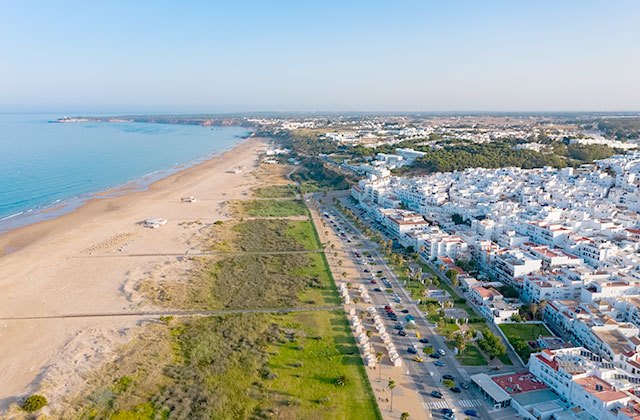
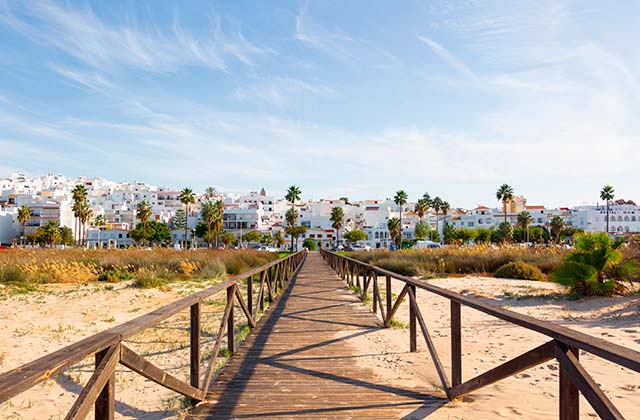
Conil is a small coastal town in the province of Cadiz that has the typical landscape of Andalucia, added to the politeness of the locals. White villages with geraniums pots hanging from the façades are the most common sight, not to forget the fact that many locals invite tourists to their own homes so that they can observe the famous Andalusian patio. Here you will be able to taste the famous cone of fried fish and a delicious almadraba blue fin tuna.
More information: Things you cannot miss in Conil de la Frontera
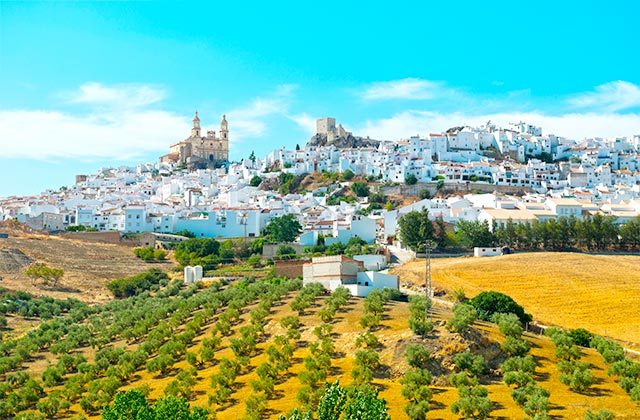
Among Cadiz’s white villages, Olvera is one of the most famous. It still keeps that historic atmosphere inherited from Al Ándalus and this is seen in the historical village. The Andalusian style, popular architecture and its monumental beauty make this area stand out within our route. Don’t miss the La Villa neighbourhood, home to the Church of Nuestra Señora de la Encarnación, a neoclassical gem, and the castle, a 12th-century Moorish fortress that still preserves its walls, turrets and keep. In Olvera, you can also explore the Vía Verde de la Sierra by bicycle, on horseback or on foot. This former railway line never actually saw any trains. The route stretches for around 36 kilometres between the stations of Olvera and Puerto Serrano and offers views of the Peñón de Zaframagón Nature Reserve.
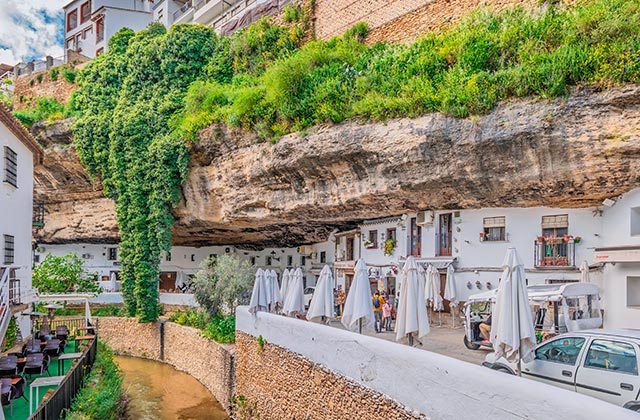
Hidden among rocks we find the picturesque town of Setenil de las Bodegas. The town has a medieval castle that dominates the town, with the homage tower and a well still intact that you will love. Do not forget to try the olive oil produced there as well as the cosmetic products that the locals manufacture with this liquid oil. On the other hand, the vine has always been one of the most predominant crops, hence the name of the place “de las Bodegas” (winecellars) Drink a good glass of wine together with some local pork meat and enjoy this lovely town in Andalusia.
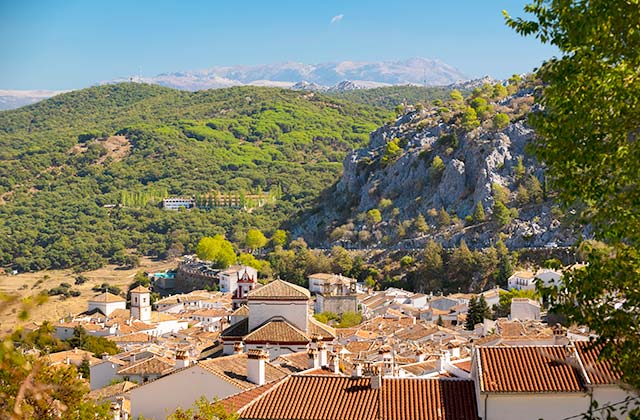
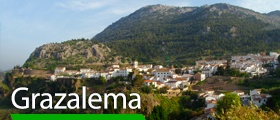
Grazalema is one of the most beautiful white villages in Andalusia and lies in the mountain range that shares its name. It is known for the rich natural surroundings, particularly its forests of Spanish firs, a unique species found in some of Andalusia’s mountain ranges. This setting offers countless opportunities for outdoor activities, including hiking, birdwatching and mushroom foraging. Before setting off on a route, check the access conditions, as trails such as El Pinsapar require prior authorisation and are subject to restrictions during part of the year.
On the other hand, it would be a good opportunity for you to visit the town’s historical centre, since it has been declared a cultural and historical heritage site, and it a god example of popular architecture with monumental richness. To complete the excursion you should try the exquisite payoyo cheese.
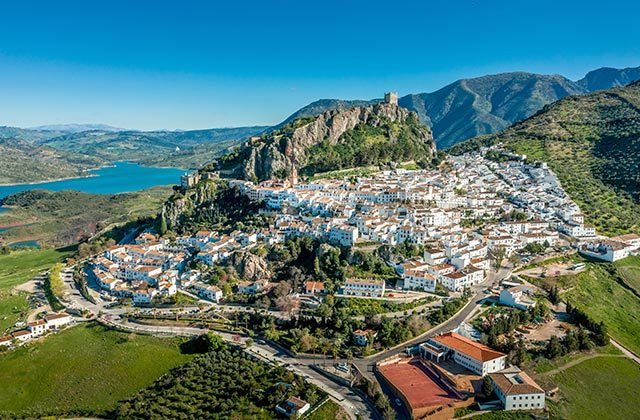
For many people, Zahara de la Sierra is the most beautiful village in the province of Cádiz, largely thanks to its spectacular setting. At its highest point, overlooking the village like something from a medieval tale, stand the remains of the Moorish castle and ancient walls. From there, the village cascades down the hillside, its bright white houses gleaming in the sunlight. Olive oil production plays an important role in the area’s gastronomy.
At the Oleum Viride olive mill, you can learn about the production process behind this excellent olive oil from the Cádiz mountains and sample its different varieties with a generous slice of bread. Check availability and book your visit in advance.
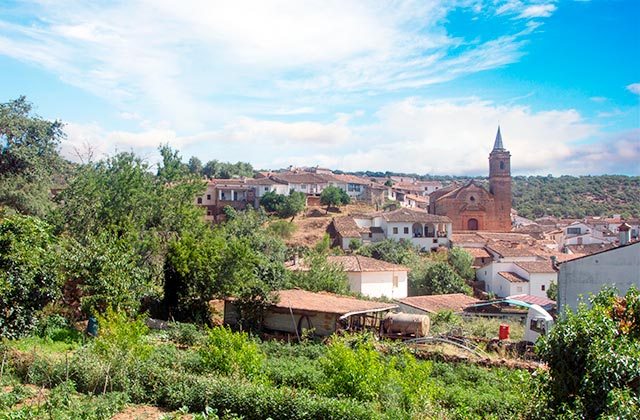
Fuenteheridos has narrow, steep streets of Moorish origin that form a harmonious and welcoming ensemble, designated as a Site of Cultural Interest. Highlights include the Church of the Holy Spirit, Plaza del Coso with its Fuente de los Doce Caños fountain, and the Villa Onuba Botanical Garden. As the garden is located on private property, you should check the visiting conditions in advance. Don’t leave without trying the seasonal mushrooms, which the local restaurants prepare to perfection.
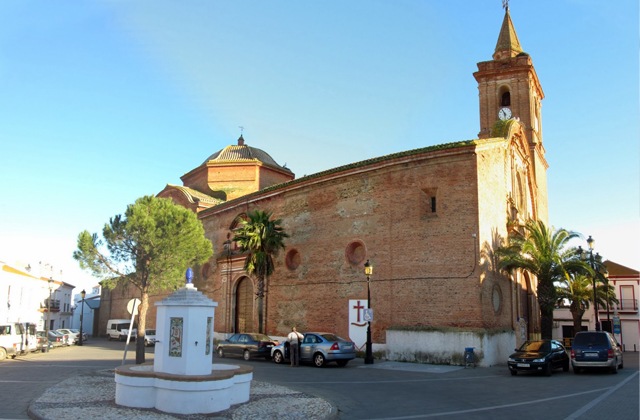
This white village in Huelva is notable not only for its architecture and natural surroundings, but also as the birthplace of the fandango. This style of flamenco is known worldwide, and one of its most famous singers, Paco Toronjo, was born here. The village has paid tribute to him with a bust accompanied by some of his lyrics inscribed on tiles. You can also enjoy a tapas tour and sample the area’s excellent cured meats, particularly its famous ham.
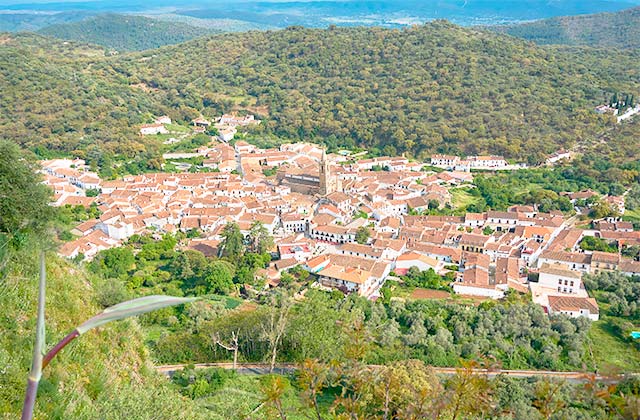
A spectacular settlement with white houses surround the impressive Natural Park Sierra de Aracena and Picos de Aroche, one of the most important protected areas in Andalusia, which occupies all the north part of the province with its meadows and small hills covered mainly by holm oaks and cork oaks. Here you can do some trekking and fill your lungs with pure air.
You can also explore its historic quarter, which has been declared a Historic-Artistic Site. This compact and peaceful ensemble of traditional houses and narrow streets blends perfectly into the surrounding landscape. The village lies at the foot of the Peña de Arias Montano, which offers impressive panoramic views of the area.
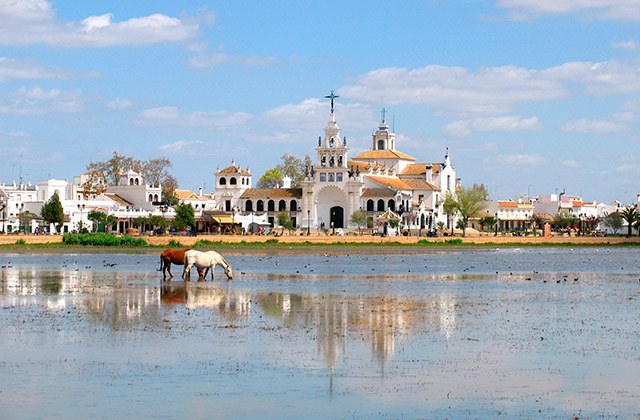
El Rocío is a village in the municipality of Almonte, located at the gateway to Doñana National Park. Surrounded by an area of outstanding natural interest, it is internationally renowned for the annual pilgrimage in honour of the Virgen del Rocío. One of Spain’s most important pilgrimages, it attracts large numbers of pilgrims every year. The date varies because it takes place around Pentecost, between May and June.
The Blanca Paloma Shrine stands out, a temple dedicated to the Virgen, with a colonial style, which contrasts with the rest of the white houses. It is quite small but you should visit it, since on the sand that paves the way, the foundations of Andalusian passion and folklore are forged.
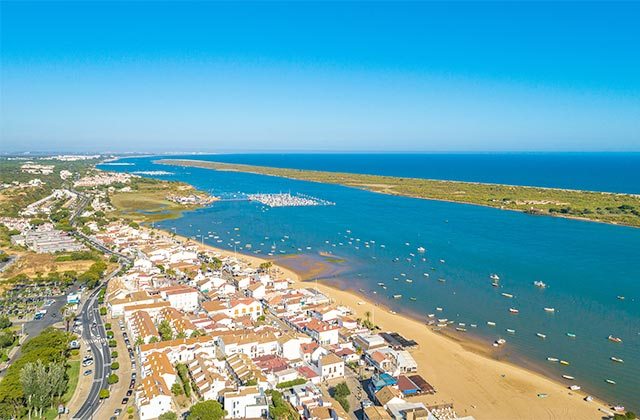
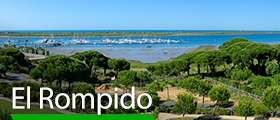
Born as a small settlement of fishermen on the mouth of the Piedras river, El Rompido is a marine neighbourhood with two lighthouses (one of them from the nineteenth century) belonging to the official limit of Cartaya. Here you will be able to dive into a very typically Andalusian setting and enjoy, above all, the combination of beautiful white houses and unique beaches. There is no better place to wonder and relax than El Rompido beach.
The wild vegetation, dunes and pine trees surrounding the beach make it a dreamy setting to seek peace and tranquillity. One of the distinctive features of this coast is known as Flecha de El Rompido, a singular sand formation that opens towards the Atlantic Ocean in the shape of a tongue from an untouched beach you can access by boat. Do not forget to try the tasty prawns or spawns of Huelva.
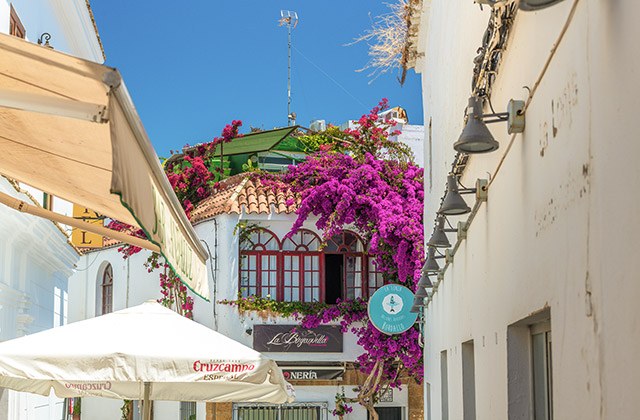
Exploring the white villages is a wonderful way to discover the essence of Andalusia. To enjoy the journey at a leisurely pace and make the most of every stop, plan your itinerary in advance and keep these simple tips in mind.
Divide the route into several stages
The villages on this route are spread across the provinces of Cadiz and Huelva, and some are quite far apart. Don’t try to visit them all in a single day. It’s best to divide the route into different areas and spend several days discovering them at your own pace.
Check distances and road conditions
Many of these villages are located in mountainous areas reached by narrow, winding roads. Allow more time than the distance might suggest, drive carefully and check road conditions before setting off, especially when rain, fog or strong winds are forecast.
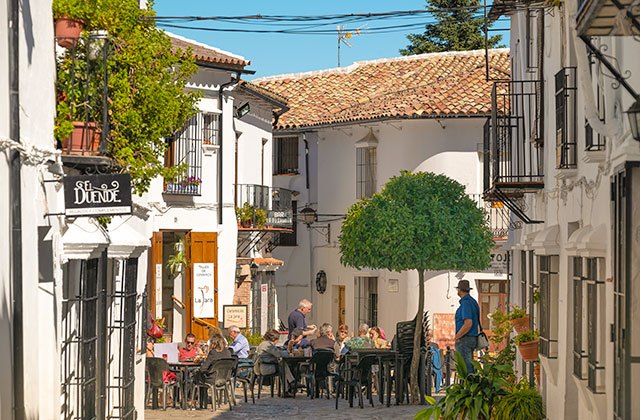
Park on the outskirts of the villages
Historic centres often have narrow, steep streets or restricted vehicle access. Whenever possible, use the car parks located on the outskirts and continue your visit on foot. Remember to wear comfortable footwear suitable for walking along cobbled streets and up steep hills.
Check opening times for monuments and activities
Opening times for castles, churches, museums, olive mills and other attractions may vary depending on the season or day of the week. Check the latest information before travelling and book guided tours or activities in advance when required.
Adapt your route to the time of year
In summer, avoid the hottest hours of the day, carry plenty of water and protect yourself from the sun. Temperatures in the mountains can fall quickly during autumn and winter, so it’s advisable to take some warm clothing. Spring and autumn offer very pleasant temperatures for walking and enjoying the scenery.
Check the details before following a nature trail
If you want to combine your visit with a hiking route, check its difficulty, duration and access conditions. Some natural areas may require prior authorisation or be subject to temporary restrictions. Always stay on marked trails, take your rubbish with you and avoid disturbing the local wildlife.
Enjoy the local cuisine
Set aside some time to try each village’s local specialities, such as almadraba bluefin tuna, olive oil, mountain cheeses, cured meats and Huelva prawns. If you’re planning to visit a particular restaurant, check its opening days and book a table, especially at weekends and during the high season.
The charm of the Málaga interior: the 22 prettiest towns in the province
Villages in Cadiz with a special charm
Huelva: 15 beautiful villages with a special charm
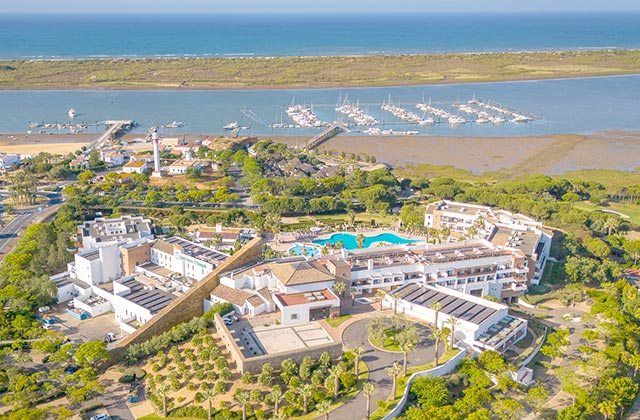
Hotel Fuerte El Rompido
Fuerte Group Hotels is always the best option to stay in Andalusia, visit its cities and rest. The chain has places where you can, in addition to its services, enjoy the best of each part of the region. With more than 60 years experience, Fuerte Hoteles is the best starting point of your perfect trip or journey. Fuerte Conil-Resort and Fuerte El Rompido are two of these exceptional hotels, where you can stay while you visit the white villages Route to the east of Andalusia. However, if you prefer to enjoy the rural charm, Fuerte Grazalema is your hotel, located in the middle of a natural park with a fantastic outdoor swimming-pool.